Wednesday, March 11, 2009

Phuket Island

Phuket Island Map
Phuket is Thailand's largest island and nestles against the Indian Ocean Coast some 870 kilometers south of Bangkok. Phuket derives its wealth from tin and rubber, is blessed with teeming marine life, and has enjoyed a rich and colorful history.

Phuket is also one of the major Asian gateways for ocean cruises. Recently a new concept has emerged: Spa Cruises. Combining Thai traditional ways of relaxing the body and mind with all amenities of an up-market cruise
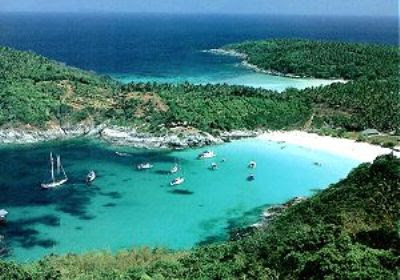
Phuket Island
Phuket is blessed with magnificent coves and bays, powdery, palm- fringed white beaches, sparkling island-dotted seas, sincerely hospitable people, comfortable accommodation, superb seafood, lushly forested mountains, lovely waterfalls and parks, and delightful turn-of -the-century Indo / Portuguese and Chinese-influenced architecture which create an enchanting ambiance perfectly suited to total relaxation.

Indeed, Phuket is a major resort of international stature, possessing everything necessary for a truly memorable holiday. First-class hotels located within town offer complimentary transport to their own beach clubs. Economy-class hotels are also available within town. First-class resort hotels with spectacular views offer air-conditioned accommodation, as do many cabin and bungalow complexes on Phuket's most popular beaches. Yet other 'native-style' complexes, built of bamboo, rattan and Nipa palm thatch, Phuket's coastal hills and beaches to offer comfortable and relatively inexpensive accommodation.
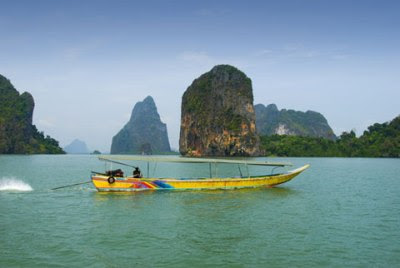
Phuket Island
Phuket's glory is its magnificent coastline. Beaches range from gentle crescents of white sand with calm waters to rocky headlands pounded by raging surf. Secluded coves lie hidden among densely forested headlands tumbling around white beaches. In several such places, visitors can feel years away from civilization. Phuket's Indian Ocean coastline boasts the finest beaches while the eastern coastline overlooks some 30 lesser islands occupying largely tranquil seas. Islands vary greatly size, some are large enough to sustain fishing communities, coconut plantations, deer and wild boar. Others are little larger than massive rocks. Others again resemble fortresses, are riddled with caves containing the birds' nests prized by gourmets.
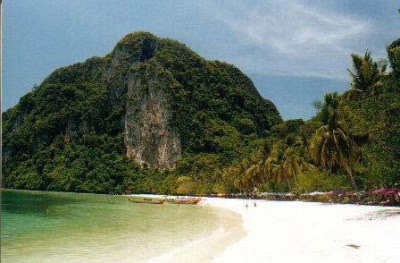
Phuket - Phi Phi Island
Phuket's nightlife is sedate and is concentrated largely in the town center and Patong Beach in restaurants, bars (many featuring video entertainment), massage parlors, nightclubs and discotheques.

Angkor Wat - Stunning Khmer Capital

The UNESCO-recognised World Heritage Site of Angkor Wat and its surrounding temples are arguably the most important and impressive temple complex in Asia. Built by the powerful Khmer civilization between 802 and 1220 AD the temples represent one of mankind's most astonishing and enduring architectural achievements and it is no surprise when one gazes upon it to learn it was from here that the Khmer kings ruled over a vast empire that stretched from Vietnam to China and across to the Bay of Bengal. This is truly Cambodia’s greatest site.

Angkor Wat
The period today referred to as the “Angkor Period” stretched from 812AD to 1432AD. During this time the Khmer kings built a city from which they ruled a vast empire, with a capital first at Phnom Kulen, 40km northeast of Angkor, and then around and at the site of what we refer to as Angkor Wat today.

Much of what we see and admire dates from what is known as the Classical Age; Angkor Wat the largest and best preserved temple at the site it was built for King Suryavarman ll in the early 12th century as his state temple and capital city. Everything here is built on a huge scale leaving one to imagine what the area was like when populated by up to a million people, the largest city of its time, their wooden houses eaten away by time and the jungle.

Angkor Wat Library
Angkor was to remain ‘lost’, ‘undiscovered’ by Western archaeologists at least, until the late 19th century when the French archaeologist Henri Mouhot came across it in 1868 ands whose prosaic description of the walled city clad in jungle created the image we still have today.

There are countless temples at Angkor but some of the main one of course, is Angkor Wat itself, regarded as the masterpiece of Khmer architecture; the walled city of Angkor Thom; the Baphuon, an 11th century temple with a 131-foot reclining Buddha; the Bayon, famous for its superb bas-reliefs and mysterious faces and Ta Prohm, still cloaked in jungle.

Angkor Wat Sunset
A minimum of two days and preferably 4 are needed to get to grips with the full extent of Angkor Wat. A guide is essential at some point given the 7-century history of the area and to begin to appreciate the achievements of the Khmer civilisation. Entry tickets are available in 1, 3 and 7 day durations (passport photo required for multi-day passes).

Sunrise or sunset at the site is a must, but also good is to head to Ta Phrom where the tree roots of the jungle add to the atmosphere of being in that legendary ‘lost city’.

Angkor Wat West Gate
There are a number of ways to explore, but on foot and by bike are the best. Cyclos too are fun – and easier on the legs in the hot sun. For those that want a bit of a different perspective on the region there are elephant and hot-air balloon rides. Those with deep pockets can even hire a helicopter.

Tuesday, January 27, 2009

The Boracay Island


Geographically speaking, Boracay is part of the municipality of Malay in the province of Aklan, which is located in Panay, one of a cluster of islands that constitute the central section of the Philippine archipelago.

Boracay can be reached from Manila by daily flights on Philippine Airlines, Cebu Pacific, Air Philippines, Asian Spirit, Seair and Pacific Air. Caticlan is nearer the island, but the airstrip is short and narrow, and only the smaller planes of Asian Spirit, Seair and Pacific Air can land on it. The larger aircraft of Philippine Airlines, Cebu Pacific and Air Philippines fly to Kalibo, the capital of Aklan. From Caticlan it takes about 15 minutes by boat to Boracay; from Kalibo, an hour and a half by bus plus the 15-minute boat ride.


Once on the island, you will find out that getting around is simple and easy. There are three categories of transport: pedicabs and motorized tricycles shared with other passengers; individually rented bicycles and motorbikes; and the shuttle service offered by some hotels. Taxis are not available. However, since everything is more or less within walking distance, you will most likely join the majority of visitors in moving around the island on foot.

Boracay is seven kilometers long and divided into three barangays, or communities. Yapak lies in the north, Balabag in the center and Manoc-Manoc in the south. Within these barangays are smaller villages such as Angol, Manggayad and Bolabog.

Yapak is spread out over hilly terrain situated some distance away from the main tourist beat, but the shoreline is dotted with beautiful, uncrowded beaches and coves such as Puka Beach and Balinghai Beach . The island's only golf club, the 18-hole par-72 course at Fairways & Bluewater , is also located in Yapak. The Bat Caves , a popular destination for nature lovers, can be found at the barangay's northeastern tip.

White Beach , Boracay's biggest tourist attraction, stretches some four kilometers on the western side of the island, mostly within the barangay of Balabag. It is largely because of the pristine, white powdery sand of White Beach and the crystal-clear blue water of the surrounding sea that Boracay is often called "the world's most beautiful tropical island."


While White Beach takes up most of the western shoreline, Bolabog Beach dominates the eastern coast. Bolabog (sometimes spelled "Bulabog" or "Bulabug") belongs to the barangay of Balabag (with very little difference in spelling, Bolabog is often confused with Balabag by newcomers to the island). Normally the boat trip from Caticlan terminates at White Beach, but during the monsoon season when the western side of the island is lashed by strong winds, visitors are brought to a docking area in Bolabog. The waters here are also considered to offer ideal conditions for windsurfing. A small dirt road takes you from Bolabog to the foot of Mount Luho , the highest point on the island.

Understandably hotels on White Beach attract the most guests. The northern end of the beach is "lorded over" by Fridays , the southern end by Lorenzo South . In between you will find all kinds of accommodation, from native bamboo-and-nipa bungalows to Western-style concrete buildings.

White Beach extends into Manoc-Manoc, but the barangay features its own share of beaches worth visiting and exploring, including one named Manoc-Manoc Beach . The barangay also encompasses the Boracay Beach & Yacht Club and Crocodile Island, a popular destination for picnics, diving expeditions and marine excursions. The Dead Forest , a scenic spot believed to be populated by elemental spirits, is likewise located within the boundaries of Manoc-Manoc. White Beach Path runs along White Beach but is set back from the shore by rows of coconut trees. Hotels, eateries, bars, stores and dive shops line the entire length of the meandering footpath. This is where visitors to the island come to see and be seen.

You will find hotels like the longstanding Red Coconut Resort and more recently constructed Boracay Regency Beach Resort on White Beach Path, and likewise the Tourist Center , a handy one-stop shop for all kinds of travel needs (airline reservations, postcards, stamps, film, souvenirs and so forth). Thai Castles, True Food, Steakhouse Boracay , Gorio's , La Reserve Restaurant , Banza and La Capannina are among the better known eateries. Bars include Bom Bom and Summer Place Bar & Restaurant . Victory Divers and Aquarius Diving are just two of the many dive shops (there are more than 20 such outlets on the island) scattered along the path. Retail stores range from Paulo Collection Body Wear to Lonely Planet. The Talipapa Market, which burnt down in early 2005, has now been rebuilt in several locations between White Beach Path and Boracay Main Road .


Tricycles ply Boracay Main Road and a handful of side streets but are not allowed on White Beach Path. Except for Jony's Beach Resort , the town square (where the church and DOT Office are located), Beachcomber Bar & Disco , Moondog Shooter Bar , Pink Patio Resort and a few other establishments, there are not many places geared toward tourists on the main road. You may, however, ride a tricycle on the road to get to a hotel or an eatery on White Beach Path; just get off at the nearest stop and walk the rest of the way.

To facilitate locating an establishment on the island, the nearest boat station is often specified in its address. Here a word on these stations is in order: Numbered 1, 2 and 3, they are used as stopping-off points by boats ferrying new arrivals from Caticlan. Do not, however, expect some well-constructed structure with a welcoming jetty for you to conveniently step on. To disembark, you can go for one of two options: Jump into the water and wade ashore or allow yourself the luxury of being borne aloft on the shoulders of some hapless porter. Happy landing!

Sunday, January 25, 2009

The Grand Canyon

The Grand Canyon is a steep-sided gorge carved by the Colorado River in the United States state of Arizona. It is largely contained within the Grand Canyon National Park — one of the first national parks in the United States. President Theodore Roosevelt was a major proponent of preservation of the Grand Canyon area, and visited on numerous occasions to hunt and enjoy the scenery.

Longstanding scientific consensus has been that the canyon was created by the Colorado River over a six million year period. The canyon is 277 miles (446 km) long, ranges in width from 4 to 18 miles (6.4 to 29 km) and attains a depth of over a mile (1.83 km)(6000 feet). Nearly two billion years of the Earth's history have been exposed as the Colorado River and its tributaries cut their channels through layer after layer of rock while the Colorado Plateau was uplifted. The "canyon began in the west, followed by another that formed in the east. Eventually, the two broke through and met as a single majestic rent in the earth some six million years ago. The merger apparently occurred where the river today bends to the west, in the area known as the Kaibab Arch."
Before European emigration, the area was inhabited by Native Americans who built settlements within the canyon and its many caves. The Pueblo people considered the Grand Canyon ("Ongtupqa" in Hopi language) a holy site and made pilgrimages to it. The first European known to have viewed the Grand Canyon was García López de Cárdenas from Spain, who arrived in 1540. In 1869, Major John Wesley Powell, a one-armed Civil War veteran, made the first recorded journey through the canyon on the Colorado River. Powell referred to the sedimentary rock units exposed in the canyon as "leaves in a great story book."

The Great Pyramid of Giza

The Great Pyramid of Giza, also called Khufu's Pyramid or the Pyramid of Khufu, and Pyramid of Cheops, is the oldest and largest of the three pyramids in the Giza Necropolis bordering what is now Cairo, Egypt, and is the only remaining member of the Seven Wonders of the Ancient World. It is believed the pyramid was built as a tomb for Fourth dynasty Egyptian King Khufu (Cheops in Greek) and constructed over a 20 year period concluding around 2560 BC. The Great Pyramid was the tallest man-made structure in the world for over 3,800 years. Originally the Great Pyramid was covered by casing stones that formed a smooth outer surface, and what is seen today is the underlying core structure. Some of the casing stones that once covered the structure can still be seen around the base. There have been varying scientific and alternative theories regarding the Great Pyramid's construction techniques. Most accepted construction theories are based on the idea that it was built by moving huge stones from a quarry and dragging and lifting them into place.
There are three known chambers inside the Great Pyramid. The lowest chamber is cut into the bedrock upon which the pyramid was built and was unfinished. The so-called Queen's Chamber and King's Chamber are higher up within the pyramid structure. The Great Pyramid of Giza is the main part of a complex setting of buildings that included two mortuary temples in honor of Khufu (one close to the pyramid and one near the Nile), three smaller pyramids for Khufu's wives, an even smaller "satellite" pyramid, a raised causeway connecting the two temples, and small mastaba tombs surrounding the pyramid for nobles.